Artificial Intelligence and Unions: What a Chatbot Can Really Do for Your Members
AI and unions in Quebec: what a virtual assistant can really do for your members, its real limits, and how to use it responsibly.
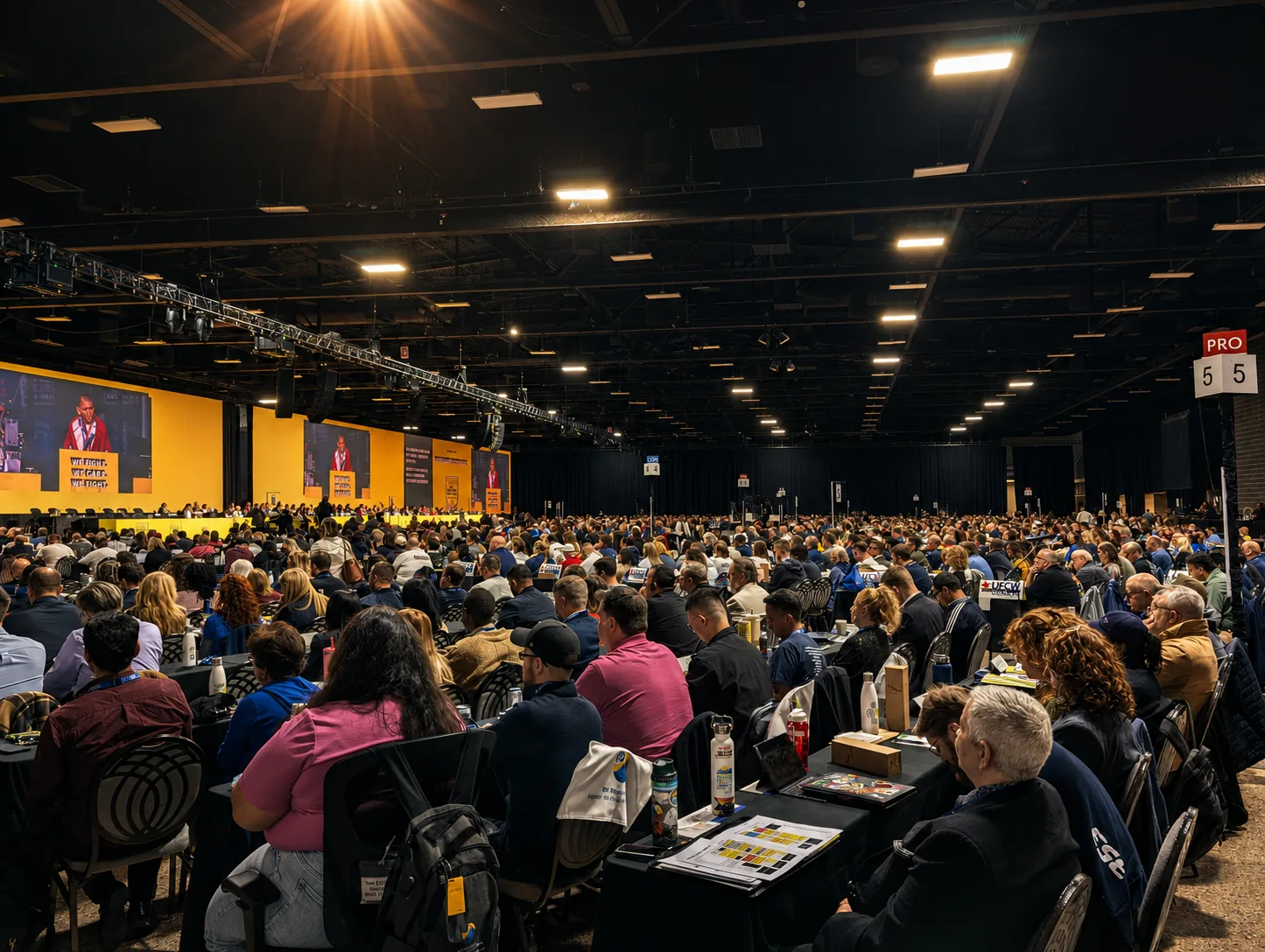
Most of what gets said about AI in the union world circles around one question: how to protect yourself against its use by the employer. Algorithmic surveillance, task automation, loss of professional knowledge. These are real issues, and the CSN made it a topic at its congress.
But there is an angle rarely covered: AI as a tool your union itself uses, to better serve its members. A virtual assistant that answers questions about the collective agreement at 11pm. That summarizes a clause in plain language. That points a member to the right procedure.
Here is what these tools can really do for your union today, where they fail, and how to govern them without putting your members at risk.
What a Virtual Assistant Can Do for Your Union
AI-based conversational systems already meet concrete needs in several organizations. Their value comes down to three things: speed of access to information, continuous availability, and the time it frees up for your team.
Answers Available 24/7
Unlike your union team, a virtual assistant can answer frequent questions at any hour: how many leave days a member has under their collective agreement, how long a notice period is, how overtime is calculated. This availability reduces your team's load on repetitive requests, especially outside office hours.
Summaries of Complex Documents
Collective agreements are long, technical, and hard to navigate for a member unfamiliar with legal jargon. A virtual assistant built on your documents can summarize an article in plain language, explain a clause in accessible terms, or help compare two provisions. It does not replace your team's legal expertise, but it makes a first understanding easier before a member needs to discuss it with a representative.
Guidance and Direction
A virtual assistant can also act as a guide: reminding members of the steps in a grievance procedure, directing them to the right department in your union, structuring a process like a complaint or a request for review. In this role, AI acts as a triage and teaching tool, not as a decision-making authority.
Fortisia's AI assistant answers member questions using your union documents (collective agreement, internal policies), without drawing on outside knowledge.
Book a demoThe Real Limits of Artificial Intelligence in a Union Context
Despite these capabilities, a virtual assistant quickly hits its limits once real, contextual, human situations are involved. This is where the line between general information and union expertise becomes critical.
Legal Interpretation of a Collective Agreement
A collective agreement is not just a text. It is a body of provisions that gets interpreted, negotiated, and sometimes contested before an arbitrator. A virtual assistant does not know your organization's internal precedents, unwritten local practices, or historical rulings between the parties. The same article can apply differently depending on a specific workplace's context. AI remains grounded in general knowledge, never in your representatives' living expertise.
Analyzing Complex Workplace Situations
Take a concrete example: a member believes they are experiencing indirect discrimination tied to their schedule. A virtual assistant can summarize the legal definition of discrimination. It cannot analyze relational dynamics within their team, understand the organizational nuances of their workplace, or gauge the implicit tensions between them and their supervisor. This is exactly where your representatives' role remains irreplaceable.
Human Support in Conflicts
Workplace conflicts are never purely technical. They involve stress, fear of retaliation, financial uncertainty, power dynamics. Your union supports people, not just files. A virtual assistant can neither reassure an anxious member nor adapt its tone to a real emotional situation.
The Risks of Misusing AI in Your Union
The main danger of an AI tool in a union context is excessive trust in automated answers.
The Plausible Answer Problem
A virtual assistant can produce a coherent, fluent, convincing answer while being wrong on the substance. In the context of a collective agreement, that can lead to a misinterpretation of a right, or the loss of a possible recourse for a member. The danger is not just the error. It is the credibility with which the error presents itself.
Direct Impact on Your Members' Decisions
If a member relies on an incorrect answer to refuse an assignment, file a grievance, or accept a settlement, the consequences can be irreversible. Bad information is never neutral when it influences a decision affecting someone's job or rights.
The Risk for Your Organization
For your union, the risk is twofold. On one side, a loss of member trust if the tool gets something important wrong. On the other, a dilution of your representatives' expert role if AI is perceived as equivalent to their judgment. Misusing AI can weaken the trust relationship that sits at the core of your union's role.
With Fortisia, the AI assistant never generates an answer from outside knowledge. If the information is not in your documents, it does not answer.
Book a demoHow to Use AI Responsibly in Your Union
The goal is not to avoid these tools, but to govern them rigorously. Used well, AI becomes a real efficiency gain without replacing your representatives' judgment.
Position AI as an Information Tool, Never an Authority
The basic principle: AI informs, it does not decide. It can explain the general content of a collective agreement, but it should never be the final source of validation for a decision affecting a member individually.
Build in Human Validation for Sensitive Cases
Any answer touching an individual situation should be reviewed by a union representative, accompanied by a clear disclaimer about the tool's limits, or limited to a general information level rather than a legal one. These three mechanisms significantly reduce the risk of a critical error without eliminating the tool's value.
Train Your Members to Use the Tool Properly
One of the most underestimated points is educating your members. Understanding AI's limits, knowing how to rephrase a question clearly, recognizing an approximate or incomplete answer: good AI use depends as much on the tool as on the person using it. This training can fit in a few lines in your launch communication, but it changes how your members interpret what they receive.
Define Clear Use Cases, and Explicit Exclusions
Structure usage around simple cases: frequent general questions, explanations of common concepts. Explicitly exclude personalized legal advice and litigation strategy. This clarity protects both your members and your organization's credibility.
What This Means for Your Union
Artificial intelligence applied to the union world is still being built out. It excels at speed, availability, and simplifying access to information. It fails at interpretation, nuance, and human support in real situations.
The challenge is therefore not technological. It is organizational: how to integrate these tools without weakening what makes your union strong, namely the capacity to listen, analyze, and represent your members.
Fortisia made this choice: use an AI assistant to simplify access to information in your union documents, while keeping human judgment and understanding at the center of union action. The tool never replaces your representatives. It frees up their time for what genuinely requires their expertise.
How we help
No more manually searching through a 200-page collective agreement to answer a simple question.
Fortisia's AI assistant quickly locates the relevant passages in your own union documents, available to your members at any time.
Your members get direct access to:
- Answers based exclusively on your documents, not generic knowledge
- 24/7 availability, even at 11pm or on the go
- A document search tool, never legal interpretation
- Data hosted in Canada, never shared with third parties
Result: your members find information faster, your representatives keep their role in analysis and support.
Frequently Asked Questions
Can a virtual assistant replace a union advisor?
No. A virtual assistant can explain general rules and help clarify a text, but it does not replace a union advisor. Real situations depend on human context, internal practices, and legal interpretations that only a trained person can analyze correctly. With Fortisia, the AI assistant acts as a document search tool, never as a decision-making authority.
Can AI give your members reliable legal advice?
AI can provide general explanations on concepts like leave, overtime, or grievances, but it cannot guarantee a reliable legal interpretation for an individual case. That is why your union should always have a representative validate situations that affect a specific member.
What are the main risks of using AI in your union?
The main risk is a member misinterpreting information, which can lead to an irreversible decision. The second risk is excessive trust in answers that sound correct but do not account for the real context of the situation. Clear governance, like Fortisia's, limits AI to document search on your own content.
How should your union govern the use of AI?
Limit AI to simple use cases: frequent general questions, explanations of common concepts, guidance toward the right service. Sensitive or individual cases should always be verified by a representative. Tell your members clearly that AI is an information tool, not a source of authority.
Will AI change your union's role?
Partly. AI can automate certain repetitive tasks and improve access to information for your members, but it does not replace your union's fundamental role: defending, analyzing, and supporting workers. It acts as a support tool, never as a substitute for human representation.